Logic Circuits<br>
Digital circuits that implement Boolean algebra<br>
Used in electronic devices to perform logical operations
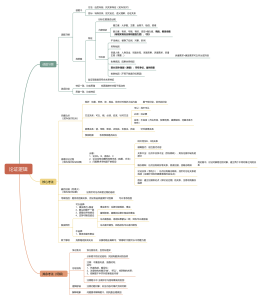
Types of Logic Gates
Basic building blocks of logic circuits<br>
AND, OR, NOT, XOR, NAND, NOR
Boolean Algebra
Mathematical notation for expressing logical operations<br>
Based on two values: 0 (false) and 1 (true)
Logic gates perform Boolean operations
<font style="vertical-align: inherit;"><font style="vertical-align: inherit;"><font style="vertical-align: inherit;"><font style="vertical-align: inherit;">Truth Tables</font></font></font></font>
<font style="vertical-align: inherit;"><font style="vertical-align: inherit;">Tables that show the output of a logic gate for all possible combinations of inputs</font></font>
<font style="vertical-align: inherit;"><font style="vertical-align: inherit;">Combinational Logic Circuits</font></font>
Outputs depend only on current inputs<br>
Examples: Adders, Substractors, Multiplexers, Demultiplexers, Encoders, Decoders
Sequential Logic Circuits
Outputs depend on current inputs and previous state<br>
Examples: Flip-flops, Registers, Counters
Logic Circuit Design
Determine inputs and outputs<br>
Choose appropriate logic gates
Simplify Boolean expressions
Draw circuit diagram
Test circuit with truth table
Applications of Logic Circuits
Computer processors and memory<br>
Communication systems
Control systems
Consumer electronics
Automotive and aerospace systems
here are some additional topics you could explore to deepen your understanding of logic circuits:
<font style="vertical-align: inherit;"><font style="vertical-align: inherit;"><font style="vertical-align: inherit;"><font style="vertical-align: inherit;">Boolean Laws and Rules: Learn about the different laws and rules in Boolean algebra, such as the distributive law, commutative law, De Morgan's theorem, and others.</font></font></font></font><br>
Karnaugh Maps: This is a graphical method used for simplifying Boolean expressions. It helps to minimize the number of logic gates required for a given circuit.
Circuit Analysis and Design: Learn how to analyze and design more complex logic circuits, such as adders, multipliers, and comparators.
Timing and Synchronization: Learn how sequential circuits work and how timing and synchronization are crucial for their operation. You could explore flip-flops, clock signals, and state machines.
Digital Signal Processing: Learn how digital signal processing algorithms can be implemented using logic circuits. Applications could include audio processing, image processing, and control systems.
FPGA Programming: Field-Programmable Gate Arrays (FPGAs) are integrated circuits that can be programmed to implement any digital circuit. Learn how to program FPGAs using hardware description languages like Verilog or VHDL.